Have you ever visited a beach and noticed the water looked much higher or lower than it did on your last trip? If you spend time near the coast, you have likely wondered about lake erie water levels. These levels are not fixed like a bathtub; they are always changing. Lake erie water levels dance to the rhythm of nature. They rise and fall based on weather, seasons, and even the wind. Understanding lake erie water levels helps us protect our homes and enjoy the lake safely. In this guide, we will explore why these changes happen in simple, easy steps. Let’s dive into the fascinating world of our favorite Great Lake!
The Basics of Water Movement
At the heart of the matter, lake erie water levels rely on a balance of water coming in and water going out. Rain and snow are the big “ins,” while evaporation acts as the big “out.” When more water enters the system than leaves it, the lake grows. When more leaves than enters, it shrinks. It is a very simple math problem that nature solves every single day. Because Lake Erie is the shallowest of the Great Lakes, lake erie water levels can react much faster to these changes than the deeper lakes nearby. This makes our lake quite unique and very active.
How Seasons Change the Lake
Nature follows a yearly calendar that influences lake erie water levels. In the spring, melting snow flows into the rivers and eventually into the lake. This causes lake erie water levels to climb higher. By summer, we often see these levels peak. However, as the air gets colder in the fall, the water begins to evaporate into the chilly air. This process slowly lowers lake erie water levels until they hit their lowest point in the winter. Seeing this cycle happen year after year is a beautiful reminder of how connected we are to the seasons around us.
GLISA – University of Michigan+ 3
The Mystery of the Seiche
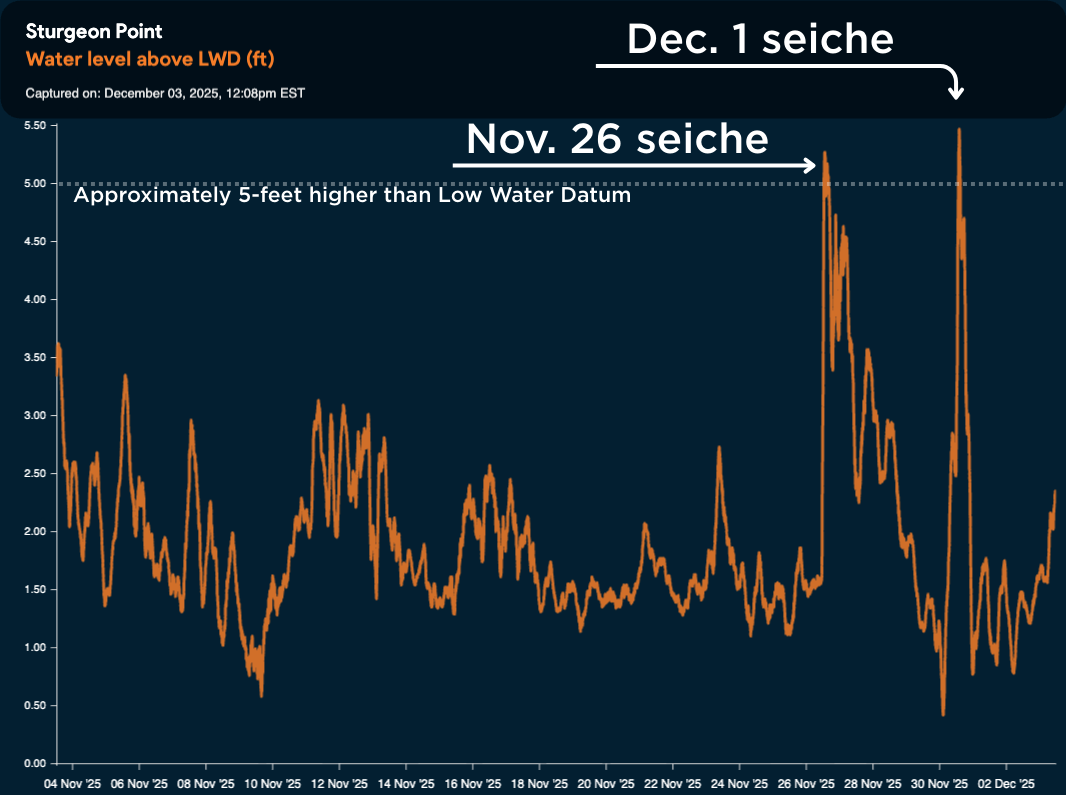
Have you ever heard of a “seiche”? It sounds like a fancy science word, but it is actually a common event here. Strong winds can blow across the lake and push the water toward one side. This causes lake erie water levels to spike in one city while dropping significantly in another. It is like tilting a tray of water. When the wind stops, the water rushes back, creating a fun, wavy motion. This temporary shift in lake erie water levels is a natural phenomenon. It is one of the many reasons why living near this big lake is so exciting.
Wikipedia+ 2
Why Shallow Water Matters
Being the shallowest Great Lake means that lake erie water levels are more sensitive to change. Think of a shallow puddle versus a deep well. If you pour a cup of water into a puddle, the level rises quickly. A deep well barely notices the difference. Because of its depth, even small changes in rainfall can have a big impact on lake erie water levels. This shallow nature also means the water warms up faster, which supports a massive amount of fish and plant life. It really is a special place for nature to thrive.
The Role of Precipitation
Rain and snow are the primary “fuel” for lake erie water levels. When we have a very rainy year, the water has nowhere to go but up. A wet spring can lead to higher lake erie water levels that last throughout the summer. Conversely, during dry years, we might see the shoreline widen as the water pulls back. Scientists watch these patterns closely to predict how much water we might have. It is just like watching the fuel gauge in a car to see how far you can go on a road trip.
Ohio Department of Natural Resources
Evaporation and Temperature
Evaporation is the secret worker that keeps lake erie water levels in check. When the lake surface is warmer than the air, water turns into vapor and drifts away. This usually happens most in the late fall. If the winter is very cold, ice forms on top of the lake. This ice acts like a lid and stops evaporation, which helps keep lake erie water levels from dropping too fast. It is amazing to think how a simple layer of ice can change the entire personality of such a massive body of water.
Ohio Department of Natural Resources+ 4
Shoreline Protection and Planning
Because lake erie water levels shift, people who build homes along the shore must be very careful. Smart builders look at historical data to see how high the water can go. Protecting our shoreline means respecting the power of the lake. When lake erie water levels are high, waves can reach further inland, which is why breakwalls and natural barriers are so important. By planning ahead, we can live in harmony with the lake instead of fighting against its natural cycles. It is all about working with what nature gives us.
Impact on Local Wildlife
The animals that call the lake home are also experts at handling changes in lake erie water levels. Many birds and fish rely on marshes that stay healthy because of shifting water. These wetlands act like sponges, soaking up extra water and providing safe homes for young fish. If lake erie water levels stay too stable, some of these important areas might disappear. By allowing the lake to breathe and fluctuate, we ensure that our favorite fish like walleye and perch have a healthy place to grow and thrive.
Economic Importance
The economy around the lake is tied directly to lake erie water levels. Tourism, boating, and fishing bring billions of dollars into our communities every year. When the water is just right, marinas are full and beaches are crowded with happy families. Business owners keep a close eye on lake erie water levels so they can plan their seasons. A healthy lake means a healthy bank account for the local shops and restaurants we all love. Keeping the lake clean and balanced really does pay off for everyone living here.
Lake Erie Foundation
How You Can Help
You might wonder what one person can do about something as big as lake erie water levels. It is actually quite simple! By reducing pollution and being careful with what we put into our drains, we keep the water healthy. Healthy water supports a balanced ecosystem that can handle natural changes much better. Every time you pick up trash at the beach or use less fertilizer on your lawn, you are helping the lake. Small, kind actions add up to a big difference for our beautiful, living, breathing Lake Erie.
Biography Table: Lake Erie
| Fact Category | Details |
| Average Depth | About 62 feet (shallowest of the Great Lakes) |
| Surface Area | Approximately 9,910 square miles |
| Retention Time | ~2.6 years (fastest turnover of all Great Lakes) |
| Primary Inflow | Detroit River |
| Primary Outflow | Niagara River |
| Key Characteristic | Highly productive for fish and wildlife |
Frequently Asked Questions
1. Does the lake ever “empty out” when the water levels drop? No! Even when levels are low, there is still a massive amount of water in the lake. It is just a shift in the measurement.
2. Why is the eastern end of the lake often more affected by wind? The lake is long, so winds blowing from the west have a lot of space to build up energy and push water toward the east.
Buffalo Niagara Waterkeeper
3. Is climate change making water levels higher or lower? Climate change brings more extreme weather. This can lead to both higher highs and lower lows, making the lake’s cycles feel less predictable.
Buffalo Niagara Waterkeeper
4. Can I check the current water levels online? Yes! There are many weather and government websites that provide real-time data on the current height of the lake.
5. Does ice cover really stop the water from dropping? Yes, it acts like a blanket, keeping the water from turning into vapor and flying off into the air during the winter.
6. Is it safe to swim when the water levels are changing? Always follow local beach signs. Currents can change when water levels move, so staying aware of your surroundings is always the best rule.
Join the Conversation! What is your favorite memory of visiting the Lake Erie shoreline? Have you ever seen the water levels change after a big storm? Tell us your stories in the comments below!
Understanding Lake Erie Water Levels: A Simple Guide
Meta Title: Lake Erie Water Levels: Why They Change and What You Need to Know Meta Description: Curious about Lake Erie water levels? Discover why they shift, how nature plays a role, and what this means for our beautiful Great Lakes shoreline today.
Have you ever visited a beach and noticed the water looked much higher or lower than it did on your last trip? If you spend time near the coast, you have likely wondered about lake erie water levels. These levels are not fixed like a bathtub; they are always changing. Lake erie water levels dance to the rhythm of nature. They rise and fall based on weather, seasons, and even the wind. Understanding lake erie water levels helps us protect our homes and enjoy the lake safely. In this guide, we will explore why these changes happen in simple, easy steps. Let’s dive into the fascinating world of our favorite Great Lake!
Tip of the Mitt Watershed Council
The Basics of Water Movement
At the heart of the matter, lake erie water levels rely on a balance of water coming in and water going out. Rain and snow are the big “ins,” while evaporation acts as the big “out.” When more water enters the system than leaves it, the lake grows. When more leaves than enters, it shrinks. It is a very simple math problem that nature solves every single day. Because Lake Erie is the shallowest of the Great Lakes, lake erie water levels can react much faster to these changes than the deeper lakes nearby. This makes our lake quite unique and very active.
Ohio Department of Natural Resources+ 2
How Seasons Change the Lake
Nature follows a yearly calendar that influences lake erie water levels. In the spring, melting snow flows into the rivers and eventually into the lake. This causes lake erie water levels to climb higher. By summer, we often see these levels peak. However, as the air gets colder in the fall, the water begins to evaporate into the chilly air. This process slowly lowers lake erie water levels until they hit their lowest point in the winter. Seeing this cycle happen year after year is a beautiful reminder of how connected we are to the seasons around us.
GLISA – University of Michigan+ 3
The Mystery of the Seiche
Have you ever heard of a “seiche”? It sounds like a fancy science word, but it is actually a common event here. Strong winds can blow across the lake and push the water toward one side. This causes lake erie water levels to spike in one city while dropping significantly in another. It is like tilting a tray of water. When the wind stops, the water rushes back, creating a fun, wavy motion. This temporary shift in lake erie water levels is a natural phenomenon. It is one of the many reasons why living near this big lake is so exciting.
Wikipedia+ 2
Why Shallow Water Matters
Being the shallowest Great Lake means that lake erie water levels are more sensitive to change. Think of a shallow puddle versus a deep well. If you pour a cup of water into a puddle, the level rises quickly. A deep well barely notices the difference. Because of its depth, even small changes in rainfall can have a big impact on lake erie water levels. This shallow nature also means the water warms up faster, which supports a massive amount of fish and plant life. It really is a special place for nature to thrive.
The Role of Precipitation
Rain and snow are the primary “fuel” for lake erie water levels. When we have a very rainy year, the water has nowhere to go but up. A wet spring can lead to higher lake erie water levels that last throughout the summer. Conversely, during dry years, we might see the shoreline widen as the water pulls back. Scientists watch these patterns closely to predict how much water we might have. It is just like watching the fuel gauge in a car to see how far you can go on a road trip.
Ohio Department of Natural Resources
Evaporation and Temperature
Evaporation is the secret worker that keeps lake erie water levels in check. When the lake surface is warmer than the air, water turns into vapor and drifts away. This usually happens most in the late fall. If the winter is very cold, ice forms on top of the lake. This ice acts like a lid and stops evaporation, which helps keep lake erie water levels from dropping too fast. It is amazing to think how a simple layer of ice can change the entire personality of such a massive body of water.
Ohio Department of Natural Resources+ 4
Shoreline Protection and Planning
Because lake erie water levels shift, people who build homes along the shore must be very careful. Smart builders look at historical data to see how high the water can go. Protecting our shoreline means respecting the power of the lake. When lake erie water levels are high, waves can reach further inland, which is why breakwalls and natural barriers are so important. By planning ahead, we can live in harmony with the lake instead of fighting against its natural cycles. It is all about working with what nature gives us.
Impact on Local Wildlife
The animals that call the lake home are also experts at handling changes in lake erie water levels. Many birds and fish rely on marshes that stay healthy because of shifting water. These wetlands act like sponges, soaking up extra water and providing safe homes for young fish. If lake erie water levels stay too stable, some of these important areas might disappear. By allowing the lake to breathe and fluctuate, we ensure that our favorite fish like walleye and perch have a healthy place to grow and thrive.
Economic Importance
The economy around the lake is tied directly to lake erie water levels. Tourism, boating, and fishing bring billions of dollars into our communities every year. When the water is just right, marinas are full and beaches are crowded with happy families. Business owners keep a close eye on lake erie water levels so they can plan their seasons. A healthy lake means a healthy bank account for the local shops and restaurants we all love. Keeping the lake clean and balanced really does pay off for everyone living here.
Lake Erie Foundation
How You Can Help
You might wonder what one person can do about something as big as lake erie water levels. It is actually quite simple! By reducing pollution and being careful with what we put into our drains, we keep the water healthy. Healthy water supports a balanced ecosystem that can handle natural changes much better. Every time you pick up trash at the beach or use less fertilizer on your lawn, you are helping the lake. Small, kind actions add up to a big difference for our beautiful, living, breathing Lake Erie.
Biography Table: Lake Erie
| Fact Category | Details |
| Average Depth | About 62 feet (shallowest of the Great Lakes) |
| Surface Area | Approximately 9,910 square miles |
| Retention Time | ~2.6 years (fastest turnover of all Great Lakes) |
| Primary Inflow | Detroit River |
| Primary Outflow | Niagara River |
| Key Characteristic | Highly productive for fish and wildlife |
Frequently Asked Questions
1. Does the lake ever “empty out” when the water levels drop? No! Even when levels are low, there is still a massive amount of water in the lake. It is just a shift in the measurement.
2. Why is the eastern end of the lake often more affected by wind? The lake is long, so winds blowing from the west have a lot of space to build up energy and push water toward the east.
Buffalo Niagara Waterkeeper
3. Is climate change making water levels higher or lower? Climate change brings more extreme weather. This can lead to both higher highs and lower lows, making the lake’s cycles feel less predictable.
Buffalo Niagara Waterkeeper
4. Can I check the current water levels online? Yes! There are many weather and government websites that provide real-time data on the current height of the lake.
5. Does ice cover really stop the water from dropping? Yes, it acts like a blanket, keeping the water from turning into vapor and flying off into the air during the winter.
6. Is it safe to swim when the water levels are changing? Always follow local beach signs. Currents can change when water levels move, so staying aware of your surroundings is always the best rule.
Join the Conversation! What is your favorite memory of visiting the Lake Erie shoreline? Have you ever seen the water levels change after a big storm? Tell us your stories in the comments below!